
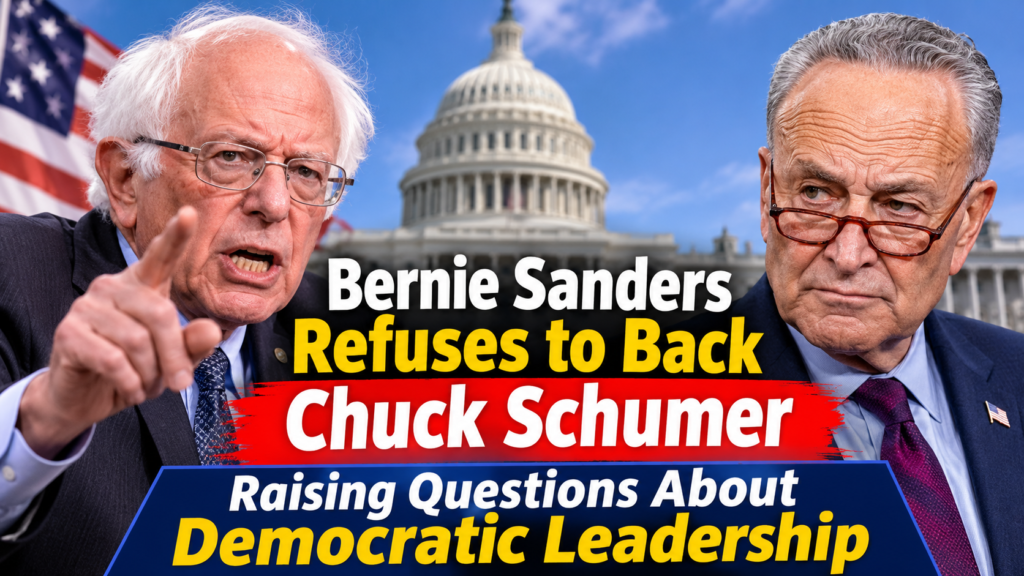
Senator Bernie Sanders has decided not to back Chuck Schumer’s re-election as Senate Democratic leader, opening a new political rift in the Democratic Party. His position has injected new uncertainty into the party’s internal leadership debates at a time when Democrats are weighing their approach for the next session of Congress.
Sanders’ move also reflects concerns shared by some Democrats more broadly about the party’s direction, its political priorities and how well it is responding to the challenges facing average Americans.
Bernie Sanders wants to do it differently
Bernie Sanders has made it clear that he doesn’t intend to support Schumer’s continued leadership. Sanders has noted Schumer’s long-time service in the Senate, but said the party needs to look more closely at its leadership and future priorities.
Sanders’ political message is still centred on economic issues. He wants Democrats to confront more head-on issues such as the rising cost of living, expensive health care, housing affordability and financial stress on working families.
His position indicates the fight is about more than just picking a Senate leader. It also includes different ideas about how the Democratic Party should talk to voters and shape its political agenda.
Chuck Schumer Still Wants To Be In Charge
Chuck Schumer has not signalled any intention to step back from his leadership role.
He said he was confident in his record, and in his ability to continue to guide Democratic senators through the next phase of their work in Congress.
Schumer has been in a senior leadership role for years and is an important figure in the party. But Sanders’ opposition shows that some colleagues who want a different approach may question his continued leadership.
The Democratic Senate caucus may have to undergo a big test of unity in the next leadership decision.
Elissa Slotkin Calls for a Clearer Leadership Strategy
Michigan Sen. Elissa Slotkin also has raised questions about what the party should expect from its next leader.
“People running for leadership should lay out their priorities and have a practical plan for their first 100 days,” she says.
Slotkin prefers the conversation to be about specific proposals and measurable goals, rather than just personalities.
Her remarks added another dimension to the debate, suggesting some Democrats are seeking clearer political guidance before determining who to support.
Chris Van Hollen Could Be in the Leadership Debate
Maryland Sen. Chris Van Hollen has also emerged as a possible alternative in the party’s future leadership discussions.
His name has gotten attention as Democrats weigh their options, although there is no final determination on a leadership challenge.
A competitive leadership contest could give Democratic senators a chance to debate their priorities, strategy and expectations for the next session of Congress.
But how much support any challenger would have is a key unknown.
What does that mean for Democrats?
The friction between Sanders and Schumer points to a key question for Democrats: where does the party go from here?
Some lawmakers might prefer to keep experienced leadership and build on current strategies. Some may feel that new priorities and a new style of leadership are necessary.
Those differences could shape the party’s legislative agenda, its public messaging and its relationship with voters.
The leadership discussion also comes at a politically important moment as both parties gear up for the next step in congressional activity.
What Will Happen Next?
Democratic senators are expected to decide their leadership during the next organising process.
Questions about Schumer’s stance and the possibility of other candidates, therefore, will likely be part of the political discussion until that decision is made.
The outcome will influence who represents Democratic senators in negotiations, public debates and discussions on key legislative priorities.
Final Thoughts
Bernie Sanders’ decision to withhold support from Chuck Schumer is another big move in the ongoing debate about what the Democratic Party is going to do.
The dispute raises important questions about economic policy, political strategy and leadership expectations.
Whether Mr. Schumer holds onto his post or another candidate wins support, the upcoming leadership decision will provide a better sense of where Democratic senators want to go.
For now, the focus is on how the party deals with internal disagreement while gearing up for the challenges ahead.