
America is consuming more electricity than ever before and that need is expected to keep increasing. New technologies, large enterprises, households and businesses all require a continual supply of power. Meanwhile, huge energy projects might take years to get approved. This has made energy supply and the price of electricity important problems across the country.
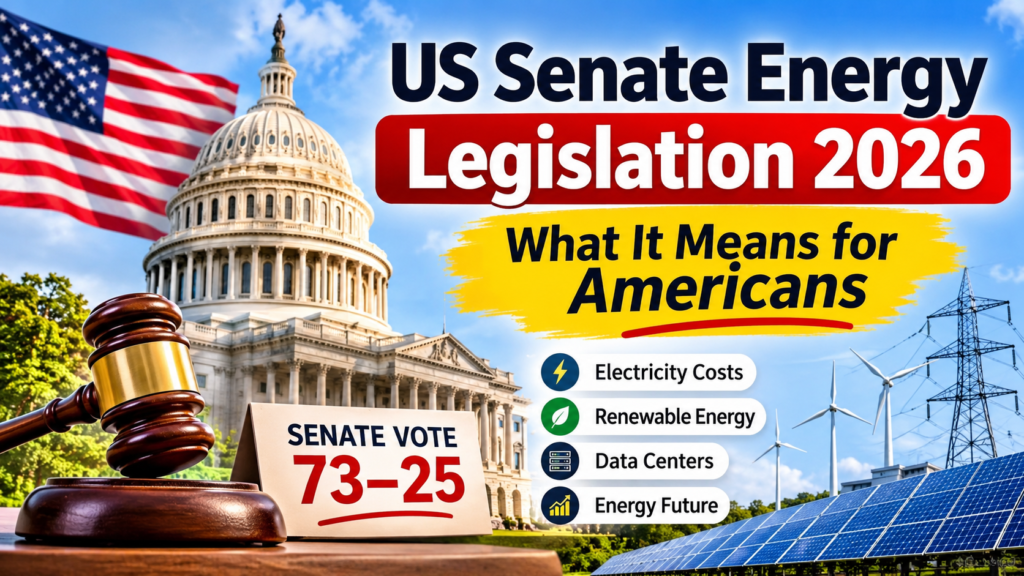
The U.S. Senate made an important step on a new proposal called the Bipartisan American Affordability and Jobs Act on Nov. 9. The Senate voted 73-25 to let the Senate move ahead and debate the bill. “The purpose is to speed up and bring more certainty to the approval of energy and infrastructure projects. It also factors in the cost of increased demand for electricity from big data centers.
The vote is being watched by lawmakers, energy companies, environmental groups and individuals around the country. Supporters say the measure might help critical projects get off the ground faster. Critics believe changes to the approval process could weaken environmental standards and limit opportunities for local residents to remark on developments near their homes.
It’s not only about developing electricity plants. It also raises questions about who should pay for new electrical grids, how to deal with communities living near them and how America can prepare for future energy needs.
The Bipartisan American Affordability and Jobs Act: What does it mean?
Sometimes called the Bipartisan American Affordability and Jobs Act of 2026 (BAAJA). It’s a blueprint for how the federal government reviews and approves some energy and infrastructure projects.
The plan has been drafted with the backing of Republican and Democratic senators. Its chief proponents are Mike Lee, Shelley Moore Capito, Sheldon Whitehouse and Martin Heinrich.
One of its main aims is to cut out delays that could hold up huge projects. Often companies have to wait a long time for permits, government assessments and other clearances before they can start developing. Sometimes, legal issues and differing government requirements add even more time.
The plan covers a variety of topics including electrical transmission lines, power generation, mining and other infrastructure projects. It also restricts what huge data centers may pay for electricity.
Proponents say that with rising demand for electricity, the country needs a quicker and transparent clearance process. Businesses need to know how long permits could take before spending money on big projects, they say.
But a faster process doesn’t mean that every application needs to be approved. The government still has to take into consideration the public safety, the environment, and the people who live close to where they want to construct.
Why the US wants to change the rules of energy
The American way of using power is evolving. Tech companies are increasing, factories need a constant supply of energy and homes need power for all the things they do on a daily basis.
The surge in demand has one major reason: artificial intelligence.
AI services need powerful processors, large storage and warehouses lots of equipment. These constructions are known as data centers, and many of these buildings demand power 24 hours a day.
Big data centers can use a lot of energy. If a lot of these plants are built in the same area, it could put a burden on local electricity grids. Utilities may then need to add additional gearbox lines or upgrade current equipment.
These proposals may take longer to get approved. Corporations may be willing to pay, but development can be stalled as government authorities review plans, grant permits or address objections.
The new idea would try to cut some of these delays by changing parts of the federal approval procedure.
The primary issue is whether the country can build energy projects fast enough while still protecting local populations and natural resources.
What the law could mean for electricity bills
Utility expenses for power are a major problem for American families. Most people already have to deal with the cost of rent or mortgage payments, food, transit and other monthly expenses. Utility price hikes can further squeeze their budgets.
If more electricity is used, power companies may have to spend money on new equipment, power lines and other improvements. These are expensive initiatives, and how the costs are spread around could impact what the average consumer pays.
Much of it has to do with the expense of huge data centers. BAAJA
The scheme would make giant computer centers pay for the transmission expenses of the electricity they consume. The goal is to avoid costs, largely incurred by large new users, being passed to old consumers.
For example a technology corporation may seek to build a massive data center in a location where the power network needs to be very substantially enhanced. Under the proposed method, the firm may have to pay for the increased demand it creates.
This is crucial because it should not be that the growth of the technology sector automatically leads to more expensive costs for families that are not involved in such enterprises.
But they shouldn’t hold their breath on lower electric rates once the initiative moves ahead. The outcome will hinge on whose standards are adopted, the cost of new construction and how utility providers enforce those limits.
One benefit advocates hope to see is cheaper bills. They aren’t a guarantyd outcome.
What the bill could mean for renewables
And renewable energy is a huge part of the conversation as well.
Solar and wind power may generate electricity without the combustion of fossil fuels. But even then, these efforts still require the suitable land, access to the electrical grid and authorisation from the relevant authorities.
In some locations, energy providers have waited a very long period to build new facilities or connect them to the grid.
BAAJA backers say faster approvals might benefit all types of energy projects. That includes renewable energy and traditional electrical sources. They argue clearer criteria would help firms better plan projects and make investment decisions.
The proposal also provides for further assurances for projects that already have permits. That’s important for developers, as any change or doubt about past authorisation could affect whether they go ahead with plans.
However, not everyone is pleased with the proposed changes. Some environmental groups fear the changes to the licensing procedure could make it more difficult to fight projects that could damage natural regions.
This means that the argument is not about choosing between renewable and traditional energy. And it is about how projects are audited, what standards they have to meet and what safeguards should be retained.
Why environmental groups are concerned?
The initiative has faced resistance from some environmental groups.
Their largest fear is about possible changes to federal review laws that would limit the period allowed to study the likely effects of big building projects.
The legislation would change parts of the National Environmental Policy Act, Clean Water Act and Endangered Species Act.
These rules allow government agencies to examine how projects can damage water, wildlife, land and people who live nearby. They also offer a method to look at potential damage before some projects may move forward.
Environmental groups worry that speeding up inspections and limiting some legal challenges will silence residents and groups.
There are also concerns about projects that could harm tribal lands, historic sites and places vital to Native culture.
The bill’s sponsors say the revisions aim to strengthen consultation with native communities and give governments a bigger say in some decisions. The adjustments are designed to address concerns raised in discussions about the plan
But some other critics think the changes don’t go far enough.
Both parties have concerns that need to be considered. Long waits can make projects more expensive, and slow down the delivery of power. But if critical reviews are rushed, the damage to the environment or local communities may be hard to undo later.
Now politicians must figure out how to let vital projects move forward without taking away protections people depend on.
What will data centers’ role be in America’s energy future?
Data centers are a major element of the discussion over what America needs in terms of electricity.
They form the backbone of many of the services we all use every day – internet storage, websites, business software, artificial intelligence, cloud services.
increased facilities means increased need for a consistent supply of electricity from IT companies.
A huge data center might require significant improvements to the local power grid. When many firms build in the same location, the demand might add even more strain to the electrical infrastructure.
This is why the new legislation is focusing attention on large computing facilities.
Its data center measuring work is aimed at ensuring that big consumers of power pay their fair share of the costs of the demand they produce.
The premise is simple. If a business needs more power and that means costly upgrading of the electrical system then the bill should not be passed on immediately to the normal customer.
The notion also creates questions about how electricity suppliers should assess costs for these massive consumers.
Clear and equitable criteria could help power companies, businesses and homes to understand who is responsible for some expenditures.
But the intricacies are going to be a big thing. Lawmakers and regulators will have to get the charges right. Nor should the laws unduly complicate the lives of others, particularly people and businesses who use power.
Why did the Senate vote 73 to 25?
The Senate voted 73-25 on Nov. 9 to advance consideration of BAAJA.
The result suggested the proposal’s introduction would be backed by senators from both major political parties.
This is important because major alterations in energy policy often create conflict between Republicans and Democrats. Bipartisan support can make it easier for lawmakers to examine a proposal that affects so many businesses and communities.
“America needs to build its energy infrastructure faster to keep pace with the growing demand for electricity,” Senate backers of the bill argue.
But it is important to know what actually happened during the voting.
The outcome was 73–25 on a procedural vote. It permitted the Senate to proceed and debate the bill. It was not a final vote on the full legislation, and did not make the proposal a law.
But before a bill can be law, senators still have to discuss it, alter it if need be, and go through more processes.
And then you have the environmental protections and what the House of Representatives will accept.
The vote was a big step, but the proposal’s future is everything but certain.
What Could the Bill Mean for the 2026 Midterms?
The 2026 midterms are adding another political concern to the mix.
Democrats scored major wins in the elections and are likely to take back both chambers of Congress when the next Congress convenes in January 2027.
This could have a bearing on what happens to BAAJA.
Some Democratic senators think the proposal does not do enough to defend clean energy and the environment. Others taking part in the talks regard it as a useful deal that could bring practical adjustments.
GOP supporters have emphasised the need to boost energy output and reduce delays that hurt big infrastructure projects.
Lawmakers have a narrow window to assess how they can move the bill through the appropriate procedures before the end of current Congress when power of Congress shifts.
The plan might have to be brought up again in the new Congress if they cannot complete the procedure in time.
That can lead to more negotiations, new arguments or changes to the bill.
The election results do not spell the destiny of the proposition. Lawmakers will have to come up with a version that can get enough votes.
What Happens next?
The next phase will be crucial for the future of the law.
The proposal will still be on for senators. They can talk about changes and vote on amendments to deal with arguments made during the debate.
If the idea is adopted by the Senate, the House of Representatives will also have a major role to play.
Some House Democrats already have claimed the bill doesn’t go far enough on their agenda. That means Senate backing won’t be enough to get the procedure through.
Both houses of Congress must approve the final version before it can be sent to the president.
The text which may be finally adopted may differ from the text discussed today.
There are certain big things Americans should be looking for in the coming few weeks. That means Senate debate, modifications to the proposal, response from House members and additional talks with energy companies and environmental groups.
Until all the required measures have been followed, BAAJA should be recognised as a proposal that is being reviewed by Congress and not as a statute that is already in effect.
My Opinion:
What Should Americans Expect From This?
The key merit of this method, in my view, is that it tries to address two problems: America’s growing need for electricity, and the cost of expanding the power grid.
Our power infrastructure needs to adapt to developments in technology, business and everyday life. Demand growth will continue, meaning new power plants, transmission lines and other modifications.
But not only about the rapid development of projects.
Environmental assessments, public participation and the rights of local populations matter. But stripping away too many safeguards could create bigger headaches for the government later, even if some projects are easier to approve today.
I also believe giant data centers should pay their fair share of the costs they create. Families shouldn’t have to pay more for electricity because the huge computer companies need more power for their businesses.”
The fairest would be the finest method. “We need to let important energy projects go ahead without unnecessary delay but we have to protect the environment and the interests of ordinary people.
The extent to which BAAJA will be able to manage this balance will depend on the final form of the bill, and how its regulations are enforced.
The Senate decision is a big step, but it’s only one piece of a much wider discourse about what energy will look like in America.
Conclusion
The US Senate’s November 9 vote has revived the national debate over energy project permits.
The Bipartisan American Affordability and Jobs Act would assist ease the regulatory process for infrastructure projects, help lower power prices for big data centers and boost building out of energy facilities.
But there are still concerns to be answered. That includes how environmental safeguards will be handled, how indigenous people will be consulted, how much say the public will have and whether the idea can receive enough support in the House.
For American families the most important thing is if these changes can deliver steady power without costs to the typical consumer.
In the weeks to ahead, lawmakers will seek common ground on these issues.
One thing is certain. America’s need for power is changing. How the country deals with such change will depend in part on decisions made in Washington.
Disclaimer: This post is for news and general information purposes only. The report is based on publicly published developments up to November 10, 2026. The legislation has not been referred to as an enacted law. Its ultimate language and possible impact could alter as it works its way through Congress.
For readers, sources:
- Associated Press (AP) – Senate Advances Bipartisan Energy Legislation, November 9, 2026.
Read the Full AP News Report - U.S. Senate Committee on Environment and Public Works – Energy Legislation Updates.
Visit the Official Senate Website - U.S. Senate Committee on Energy and Natural Resources – Energy Policy and Legislation.
Visit the Official Committee Website - Congressional Research Service (CRS) – Energy Policy Reports.
Read Congressional Research Reports